
 Apple Podcasts
 Spotify
 Amazon Music
 The "Secret Superpower"
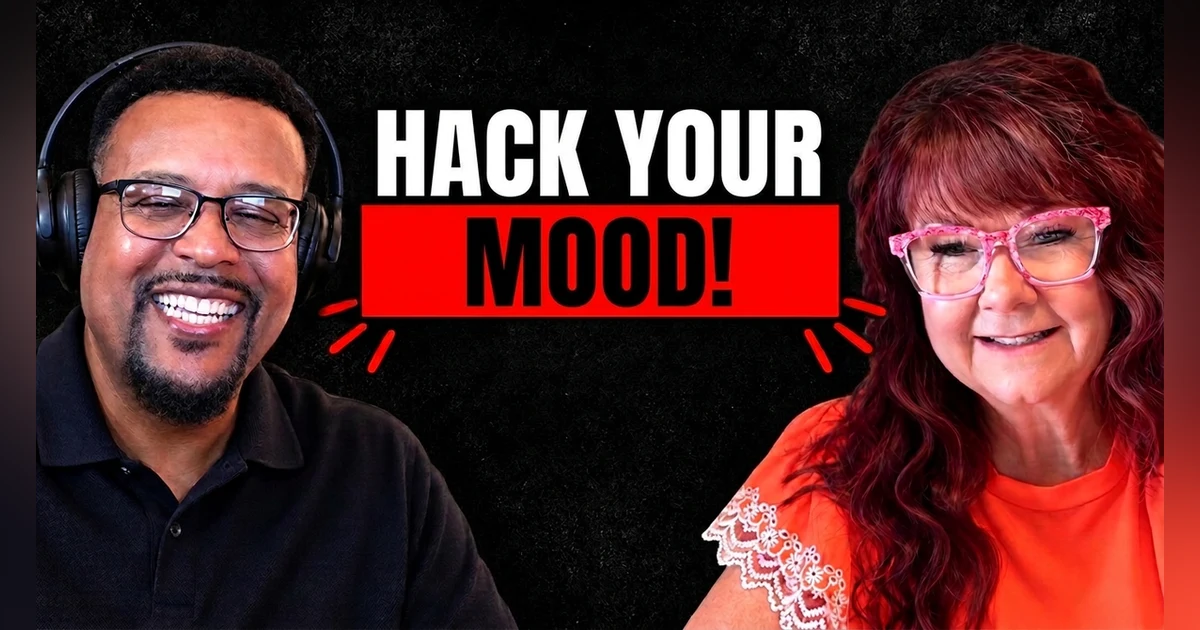
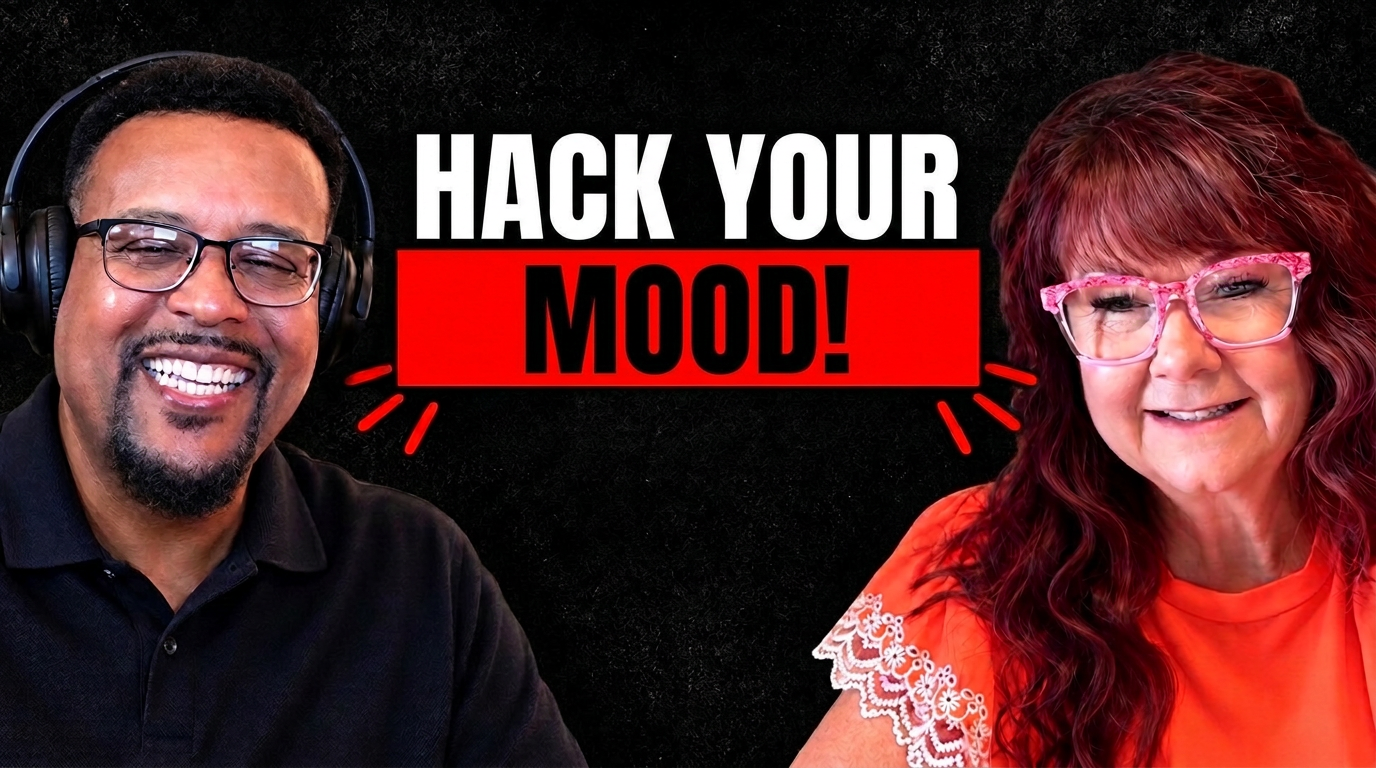
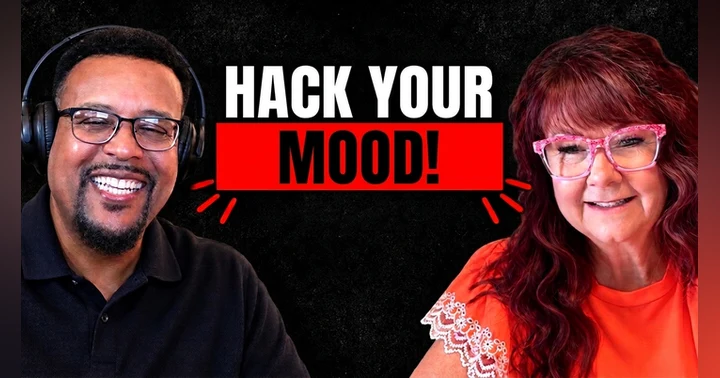
In this fascinating episode of the Well2Lead Podcast, host Bobby Davis sits down with holistic health practitioner and author Laurie Hartley-Moore to explore the profound intersection of color psychology, subconscious mindset programming, and whole-body wellness.
What if you possessed a hidden, everyday superpower that could instantly boost your confidence, lower your stress, and shift your entire biology?
In this fascinating episode of the Well2Lead Podcast, host Bobby Davis sits down with holistic health practitioner and author Laurie Hartley-Moore to explore the profound intersection of color psychology, subconscious mindset programming, and whole-body wellness.
Laurie shares the heartbreaking yet inspiring story of how her mother's cancer journey opened her eyes to the limits of Western medicine, launching her into a life dedicated to holistic healing. Together, Bobby and Laurie map out the Belief Chain—the psychological loop showing how your early programming controls your thoughts, emotions, and your ultimate reality.
Laurie also shares her actionable "five-second formula" to intercept negative thoughts before they trigger a damaging stress response in your nervous system.
But the real game-changer is Laurie’s deep dive into her book, The Color Constitution. Discover how color is actually a light frequency that alters how we feel.
Learn how to strategically use Red for courage, Blue for calm, and Orange for connection. Whether you're looking to redesign your office space, re-strategize your morning wardrobe for a big meeting, or heal your mind-body connection, Laurie outlines a simple framework to stop letting life happen to you and start commanding your outcomes.🎁
Download Laurie's Free Color Guide & Chapter Downloads: https://thecolorconstitution.com/home#free-gift
📚 Get the Book "The Color Constitution": https://thecolorconstittution.com
🎙️ Subscribe to the Well2Lead Podcast: https://www.youtube.com/@Well2Lead
Get Bobby's Book: https://authorbobbydavis.com/
Key Timestamp Chapters
- 00:00 - Welcome Laurie Hartley-Moore: Color, Mindset, & Wellness
- 01:07 - The Sacred Space: The Story Behind the Utah Log Cabin
- 06:25 - A Journey Triggered by Loss: How Her Mother's Cancer Guided Her Path
- 10:37 - What Does "Holistic Health" Actually Mean? Expanding Beyond the Physical
- 14:59 - The Belief Chain: How Your Inner Programming Creates Your Reality
- 18:54 - The Five-Second Formula: How to Interrupt a Negative Thought Loop
- 22:29 - The Cost of Chronic Negativity on the Human Nervous System
- 25:50 - Mindset vs. Chemistry: The Dual Reality of Anxiety and Depression
- 29:12 - Color Psychology: The Hidden Superpower for Elite Confidence
- 34:08 - Shifting States: Decoding Blue for Trust and Orange for Connection
- 37:17 - A Mother's Final Vision and Its Profound Impact on Color
- 42:34 - Grounding Frequencies: Why Brown, Beige, and Green Restore Us
- 44:54 - Clinical Applications: Color Therapy in Healing & Recovery Environments
- 47:44 - Eating the Rainbow: How Food Colors Carry Biological Frequencies
- 51:04 - Command the Outcome: How to Apply Intentional Color Every Day
Bobby Davis (00:00.987)
Lori, how are you doing this morning?
Laurie Hartley-Moore (00:27.166)
I'm so good, Bobby, and s just so grateful to be here and to share this time and space with you. Thank you. Thank you for the invitation.
Bobby Davis (00:35.967)
yeah, certainly. I'm excited today to talk to you about the psychology, color psychology, actually, and and confidence. We are really looking forward to learning more about that. And but I I was talking with you a bit offline, Lori, about the the lock cabin. So you're in Utah.
Backdrop as you can see, log cabin. Tell us a little bit about that log cabin setup.
Laurie Hartley-Moore (01:07.928)
Ha ha.
Well, it's kind of a funny story, honestly. I met my husband, well to be husband, back in nineteen eighty seven, which is a long time ago. And I hate to admit that it's that long ago. in my in my mind I joke that I'm still twenty eight. So yeah. He was building it as a bachelor pad here in the foothills in the Rocky Mountains, and little did he know, a wife and three kids later.
Bobby Davis (01:23.169)
Yeah.
Bobby Davis (01:26.838)
yeah.
Laurie Hartley-Moore (01:38.438)
we would still be here 40 years you know hence and loving it. It's I've always been a nature girl and to be in the elements of the log home and we have property around us and just beautiful landscaping and my patio and it's just I call it my sacred space because I can go and connect and just reset and balance and I love I love the uniqueness of our log home.
In fact we laugh because people say, let's go on vacation and we'll stay in in one of those log houses and we leave and say, Let's go on vacation and stay in one of those, you know, art deco type houses 'cause, you know, you always want what you what you don't have but I
Bobby Davis (02:20.107)
Yeah, yeah.
Bobby Davis (02:24.919)
well, no, that you got a good point there. And actually, I I I was planning a vacation or will be planning a vacation to the mountains and so for the last year I've been looking at log homes and that's the you know, that's the intriguing part. 'Cause I had a actually have a friend that took a vacation once to
to the mountains and they stayed in the log cabin home. So just the whole idea of nature, which I'm a huge fan, fan of being out in nature and just connecting more. I'm looking forward to that at some point. So appreciate you sharing that. Yeah. So so Laurie, we we got a lot of terrain to cover this morning.
Laurie Hartley-Moore (03:06.283)
You bet.
Bobby Davis (03:13.751)
But before we get started, maybe you can tell us more about you now. I know that you're an author and you have done a lot of great things out there. But tell us more about who you are.
Laurie Hartley-Moore (03:26.261)
Well, honestly, you know, I really when it
boils all down to it. I grew up believing that I wasn't smart. And it wasn't until I graduated from high school and had the freedom to start learning things that I was actually really interested in that I realized that I was smart and that I could learn. And it became almost a an addiction of sorts where I still love learning to this day.
And that love for learning led me down the path of really wanting to understand people, us as a human race. You know, what makes us tick? What helps us to function better? How can we learn to, you know, stress less and have more success? And so as I journeyed down many paths, I have worn many hats. And some of those look like an international
bestseller, number one international with our book, The Colored Constitution, that we just launched back in February of 2026. I'm also a holistic health practitioner. I have my mother's heritage is Native American and so I have had the blessing of learning medicine through the Native American culture and so I've I've got a certification as a a nationally accredited
Native American medicine woman. And through many different experiences in life, holistic health has become my foundation. And I really am passionate about helping people understand that we are more than just our physical body or our even our emotional body, but there are many aspects to us. And the more we can learn about each one of those,
Laurie Hartley-Moore (05:28.493)
the easier life can be. And so honestly I could, you know, I could list all the the accolades and the I've done this and I've done that. But it's really for me it's not about that. It's about how can I stand in love in a healthy way and help others to do the same. And that's really what lights me up every day and and brings me here to your platform.
Bobby Davis (05:35.671)
Yeah.
Bobby Davis (05:52.554)
Yeah, yeah. Man, that's awesome. Awesome, awesome story. And you know, you mentioned something about your transition into I guess the holistic space. Was there something
that you know you experienced that pushed you in that direction. Because there could have been a lot of paths you could have taken, obviously, as a lifelong learner. There are things you could have done differently. but why holistic?
Laurie Hartley-Moore (06:15.82)
Yeah.
Laurie Hartley-Moore (06:25.793)
Well, I'll tell ya, as a nine year old little girl, I watched my mother go through cancer her first time and her journey through all of what modern medicine could offer back then in the you know, the late seventies, early eighties. And then again, it she came through that and eight years later ended up with cancer again and
just the struggles, the pain, the heartache, the loss, as we did finally lose her back in ninety one. And watching how the Western medicine culture didn't have all of the answers. And the more I studied and learned, the more I realized, you know, it's not that I blame the doctors for not being able to do a good job. I believe that there is a gap.
In the education that's offered to our professional medical people in how the body actually functions as a whole. And it's not just about, you know, let's take this peel to mask this symptom. The body is really an incredible being that is designed, number one, to heal if it's given the proper things that it needs to create that.
homeostasis. So often it comes down to either a toxicity overload to the body, a malnutrition situation, or even some sort of environmental condition from you know parasites or mold or something to that effect. So there it just as I lost my mother and watched several other people that I loved pass away not being able to find
The healing that they so desired. I went on a journey to again learn everything I could to number one, hopefully never have to be in that position myself. But number two, that I could help everyone that I loved and even those that you know found me and knew that I could potentially support them. That led my passion to understand holistic health and each piece of it so that we can use.
Bobby Davis (08:37.675)
Right.
Laurie Hartley-Moore (08:55.373)
Utilize everything we've been given and the knowledge that's been passed on for centuries. I like to call it original medicine sometimes, that in our modern day we've we've lost, we've forgotten a lot of. So I think it's a beautiful balance. We need both, right? We need the acute care that modern medicine can give us, but we also need that understanding of how we can steward and
Bobby Davis (09:05.475)
Yeah.
Bobby Davis (09:20.354)
Right.
Laurie Hartley-Moore (09:25.303)
take care of our bodies before we get to that acute scenario. So hopefully that gives you some insight.
Bobby Davis (09:31.148)
Yeah. No no I completely agree with you. and the holistic approach is certainly one of taking ownership or stewardship as you use the word over over your body to to to take care of it as best you can.
And as you indicated, you know, our medical system, one of the best in the world, is it's walking in conjunction with that, but understanding that, you know, we take that responsibility on. But I guess if someone's listening to this and they have heard the term before, Lori, as far as holistic wellness, can you give us
a layman's term for that. Can you break that down a little bit more in detail? Because I don't want to take for granted everyone that may be listening to this is aware of what holistic and the difference between holistic health versus traditional health.
Laurie Hartley-Moore (10:37.119)
Absolutely. That's a great question, Bobby.
And the simplicity of it is we are, like I said, more than just our body, right? as modern science catches up, it's very evident that we are affected by the external environments that we're in. let's take stress as a number one example. We know that over amounts of stress, excessive amounts of stress, can literally cause us to be un
well and there is not just the physical body that we're dealing with but a mental and emotional aspect that is it's really the I think it's foundational under everything because if we're not right in our mind and our heart the body cannot do its job eventually it's going to manifest the stress or symptoms of whatever
That dis-ease. We're gonna break that word in half, right? There's a dis-ease in the body that is taking place that then creates disease because of that overload on our systems. So, you know, everything from I call it the seven bodies of balance. we have our physical body, we have our mental body, we have our relational body, which is how we interact with others and those that we're
closest to. We even have our you know our career where we're we're having to work and be out there in society. We have our energetic body which for some people that you know might seem a little woo-woo but again science is now being able to prove that we are an energetic being and we're affected by outside energies. That has to be something we take into consideration.
Bobby Davis (12:18.509)
Mm-hmm.
Laurie Hartley-Moore (12:39.155)
And then we also have a spiritual body. We have that part of us that is beyond matter, that you know, some people have their own words and description for it, but there's a a part of us that lives within our physical body, and I to call it the spirit, that is what keeps us here and alive. And if that spirit is unwell, eventually the body will follow as well. So they're
Bobby Davis (12:56.611)
Mm-hmm.
Bobby Davis (13:03.757)
Right.
Laurie Hartley-Moore (13:08.975)
A holistic approach is, you know, what does my day look like? How am I balancing all of those areas and trying to to keep a focus on the things that are gonna keep me the happiest, the healthiest, and and able to find the most harmony in our lives.
Bobby Davis (13:30.049)
Yeah. Now good point. You know, a lot of people think that when you hear terms like holistic or wellness or fitness or you know you know those types of things that they they just associate it to body, just the body, right? And what you have just described is is there are some other components to this that makes up
a holistic approach to to wellness, which, you know, when we think about it, our minds when especially a lot of stress is generated from that position of thinking and then also, you know, the the spirit.
So there's a well-rounded approach that has to be looked at when you talk about holistic or wellness because you have to look beyond just, you know, lifting weights at the gym or going for a long walk. Those things help, right?
Laurie Hartley-Moore (14:33.441)
Yes. Yes.
Bobby Davis (14:34.455)
But but there are some other components there. So I'm glad that you gave us a an overview of that. Has there been something that you have discovered yourself personally that changed your life or changed things for you for the better when you start taking on this holistic approach approach to health?
Laurie Hartley-Moore (14:59.339)
Yes, absolutely. And again, I think this is not only foundational, but it's pivotal. And there's a sequence that happens. And once you understand this that I'm gonna share with you, you can't unsee it. So it it really starts with a belief. We all have programs and stories that we have written because of our experiences, clear back from the minute we were born as children.
And we grow and learn in our environment, we learn what gets our needs met. So if we are in an environment with adults that expect us to be a certain way, then we will we will act that out in order to get the needs met as a child that you know that we have.
Everything that a child experiences is considered fact. Whether it's fictional or fact, it goes into the database of the child, it's where their brain is at in its development at that time. After the age of seven, we start to be able to differentiate. But before that, everything's truth. So we write our programs very early. So what you believe to be true, whether it's true for somebody else or not, it's true for you. So what you believe creates your thoughts.
Bobby Davis (16:17.731)
Mm-hmm.
Bobby Davis (16:26.071)
Right.
Laurie Hartley-Moore (16:29.159)
Okay, so then once you have a thought, your thoughts are going to create your emotions. Then that emotion is going to move you into your action or your reaction. And then those actions create your reality. So we have a program that creates a thought, a thought that creates an emotion, an emotion that creates an action, and an action that creates a reality. So understanding
Bobby Davis (16:35.821)
Mm-hmm.
Laurie Hartley-Moore (16:59.099)
That it's all what kind of programming we're running inside our mind, our belief systems, is what kind of life we are actually experiencing. It's a big deal because number one, it puts the responsibility back in your own lap where you actually begin to identify that you can happen to life instead of just being a victim of life happening to you. And that's really where that door.
Bobby Davis (17:26.211)
Right.
Laurie Hartley-Moore (17:28.889)
door opens and we can start to to just as an a a free adult that has choices ask ourself is what I'm believing even true? Is that still serving me? And how is it affecting my life? And if it's not what I need, I can actually create the change that can rewrite that story and create a different outcome.
So you send me down that road, we'll be here all day.
Bobby Davis (18:00.466)
No, no, no, no. I I think we're going down a good a good road though. Because I mean what you what you just talk yeah, you talk you're talking about the mind, right? And you mentioned thoughts. Now here's something interesting, Lori. I had I I hear this a lot, believe it or not, from adults who say I can't or I struggle controlling I I struggle controlling my thoughts.
Laurie Hartley-Moore (18:05.409)
Good. Good.
Laurie Hartley-Moore (18:12.301)
So.
Bobby Davis (18:30.819)
And I know a lot of my problems exist because of the way I'm thinking, but I don't know how to change it.
Laurie Hartley-Moore (18:42.807)
Yeah.
Bobby Davis (18:44.253)
What do you say to a person that presents that to you, knowing what you know now?
Laurie Hartley-Moore (18:54.487)
Yes, absolutely. So I I would love to give you my favorite trick and I call it the five-second formula. there's Dr. Schuberman has written a whole book about how to control chronic pain. And one of the things that they have studied and learned is that there is a chemical reaction in our bodies within five seconds of having a thought. So let's say I'm driving down the road and somebody cuts
Me off, and my first thought is, you idiot, I'm so mad at you. I have five seconds before that chemical reaction of that thought is going to release stress hormones in the body because of I'm I'm feeling angry and agitated. Now, if I know that I have five seconds and that's not the chemical reaction that I want to stay in my body and affect me for the rest of the day, I can actually choose a
Bobby Davis (19:28.715)
Right.
Laurie Hartley-Moore (19:54.314)
Again. And and I might not believe it right off the mo, you know, the the words falling off of my tongue, but if I can change my thought in that five seconds, or at least be conscious that I want my thought to be different, and let's say I change my anger to just, hey, I wish that guy good luck today. I hope they that that gal gets wherever she's going safely. Now all of a sudden my thoughts are love and peace, and I am released.
Bobby Davis (20:15.873)
Right, okay. Right.
Laurie Hartley-Moore (20:24.217)
Releasing the feel-good hormones that my body can utilize to help me be happier all day. So it's a five-second rule and it takes practice and it takes a lot of practice. But if you know that you're struggling to change your thoughts, it becomes a simple exercise that you can do at any moment where you can stop. I call it step left, where you just step out of that energy. Literally, you can pick your feet up, move to the left, and then
choose again you've got those five seconds to go nope I'm not gonna stay in that frequency I want to feel this way and therefore I'm gonna replace that thought with this one that's going to be better for me and for the world at large because that now I'm putting out you know love and peace and hope instead of anger and hate and fear. So the five second formula that's my favorite trick
Bobby Davis (21:09.601)
Yeah. Yeah.
Bobby Davis (21:18.891)
Right. No. No, that that's a good point. Yeah. Thought replacement. That that's it. I mean, 'cause you got a choice. You do have a choice, but you gotta make it you got like you said, five seconds, right? You gotta you gotta choose which direction you're gonna go in if you're gonna let that thing take you down the rabbit hole and create some you know, mess the rest of your day up. But I I as you were talking about that, Laura, I was thinking about this, like
From your experience, what has negative thinking, let's just frame it as that, negative thinking. What are some of the health risk does negative thinking pose? Because you talked about you paired you you paired it up before with you know the thought process and how it
Laurie Hartley-Moore (22:07.98)
Yeah.
Bobby Davis (22:14.931)
it it triggers these hormones, right? But so what is some of the what is some of the imp the impact that may be levy on having negative thoughts rolling through your head all day?
Laurie Hartley-Moore (22:29.004)
Well
I'll tell you the first thing that comes to thought is our central nervous system and that parasympathetic nervous system. We are constantly balancing that fight or flight. Am I safe? Can I trust my situation I'm in? am I going to be supported if I need it? So as we ruminate and get stuck on those negative thoughts, we're not just giving
ourselves a bad mood. We literally are physically affecting that nervous system. And a nervous system that's been constantly stuck on fight or flight, meaning it's it's constantly in panic of, you know, am I safe? Am I going to be okay here? it eventually can lead to things like depression, severe anxiety and and a all kinds of disorders where people, know,
become recluse or they have a hard time being in public situations. So it it really does lead to everything from a decreased energy level to a full-out imbalance inside the chemical makeup of your body and it it can be very very detrimental.
Bobby Davis (23:52.088)
Yeah, no that no that's that's important information and as you know we've been talking a lot about holistic approach to you know better health, right? And you just gave us an illustration of what you can do if you are encountering negative thoughts because
Over time if you digest enough of this negativity in your mind, then obviously based on the information you just shared, then there are some potential health com consequences that you may have to contend with. And it leads me to believe that a lot of what what what we see happening right now is is we see people struggling with depression a lot. And
It can be because of your current circumstances. You're focusing a lot on your current circumstances or what might be happening in the world. It could be numerous things that could be causing this depression. But I'd like to go back to what you just shared, which I think I think again, I wanted to reiterate this to our audience, is that you have a choice. Every time something negative goes down, you have a choice.
get the negative thoughts right you do have a choice and as long as we can remember that you have a choice irregardless of what may be happening you have to find some type of gratitude or something extract something good from it in order to help you from a health standpoint but not only that but it also makes you feel better
And it may not change the circumstances at the time, but it's certainly better than the opposite, which is taking a negative approach and inundating yourself with a bunch of negative thinking. So thank you for sharing that. and I I I yeah, go ahead, go ahead.
Laurie Hartley-Moore (25:50.04)
Yes. You bet. You bet. Can I I I just want to add something there because I don't want to make light of somebody that's struggling with these negative thoughts or a diagnosis of depression. There really is two components to this that is the first place I would start to look for clues. One is, you know, what is my stinking thinking, if you will.
It am I are my thoughts stuck in the future of all the what ifs and that's creating my anxiousness? Or are my th thoughts stuck in the past of all of the shulda, coulda, woudas, and that's creating my my depressed state? so ask yourself, where am I? Where are my thoughts? How? And then it gives you the ability to analyze and to change them. But also there, especially in today's day and age.
And environments, there is a very large component of this that is a chemical reaction in the body because of a lack of nutrition. With my clients, one of the very most easiest potent things that we can do is we test through their blood work their vitamin D levels, and especially going into the winter months. If your vitamin D levels are low, which most people, I mean it's like seven.
Percent as the statistics are low on their vitamin D, your brain chemistry is going to struggle more than it would if they were at their optimum levels. I've watched people come into my office and we are able to judge that, get them supplementing vitamin D, and within 72 hours, their anxiousness, their complete apathy for what's going on in their life, it
it dissolves and all of a sudden that that unexplainable hope and wellness comes back into their mind. And then it makes it a whole lot easier to be more positive, to change your thought processes. But if you're chemically imbalanced, you can fight trying to be positive all day long and you you're likely not going to win that battle. So you need to make sure that you're addressing both pieces. Again, bringing it back to the wholeness of we're not just
Bobby Davis (27:49.987)
Yeah.
Bobby Davis (28:02.923)
Mm-hmm.
Laurie Hartley-Moore (28:17.825)
we think we're not just what we eat or do but it's a combination of both.
Bobby Davis (28:23.885)
No, that's that's a very good point. yeah, nutrition, wow, I'm glad you mentioned that. It it it is so vital. And we a lot of times we skip over because we just don't even think about it. We don't think how that could affect us in so many different ways. and you just gave us a great a great illustration on that. But I wanted to to you know, as we would as we've been talking about the mind and you know, just
Happiness and how to deal with you know things such as depression and other things that come up in life. You you have this approach or this book that you wrote, right? That I want to learn more about that has something to do with happiness and proving confidence and things of that nature. But it's all tied into color. What is that all about?
Laurie Hartley-Moore (29:12.671)
It is. Yes. it's so fun. It's my favorite thing. what if, Bobby, I asked you the simple question of have you ever wished that you had a secret superpower?
Bobby Davis (29:30.891)
Yeah, all the time.
Laurie Hartley-Moore (29:31.831)
Yeah.
All the time. Okay. Well what if you had a secret superpower that could help you be happier, have more better health and have the relationships that you want the most. Would that be a superpower that you would love to have? Yeah. Okay, well here's the fun part. It literally is color. Color has been affecting us from the moment we were born.
Bobby Davis (29:50.721)
Yes, absolutely.
Laurie Hartley-Moore (30:02.713)
There is not any space in time in this world that we are not being affected by color. Now that's a pretty big statement. Let me give you some science to back that up. I I tell people all the time I love the woo-woo stuff, but I love it even more if I can back it up with science, because then we can measure it and it becomes factual. So color is actually light.
Bobby Davis (30:13.443)
Yeah.
Bobby Davis (30:24.749)
That's right.
Laurie Hartley-Moore (30:32.623)
It's light waves, and light waves are frequency or energy. Now we could spend you know 10, 20, 30 minutes just talking about the science of color, but I just want you to understand that every color has its own unique imprint, its own energy or wavelength frequency, depending on which part of the spectrum that color resonates from. Now, earlier we talked about us being
Energetic beings. Okay. And when when I start talking about energy, sometimes people get a little leery, like, I don't know about this. But a perfect example is we have that electrical system inside of us that runs all of our nerve endings, and even the spinal cord, right? What happens when the spinal cord gets severed? We we're out. Nine times out of ten, that's you know, that's a devastating injury because that.
Bobby Davis (31:26.871)
Yeah.
Laurie Hartley-Moore (31:32.736)
spinal cord and all the electrical messaging that happens there is what runs our physical body. So it it really comes down to color is energy and we are energy and we are affected by our frequencies as a human are affected by the frequencies of color. So when we begin to understand that and realize that each color has its own
characteristics, attributes, and abilities to influence our well-being, for positive or for negative sometimes. And we can utilize it as that superpower because we we begin to be able to command it and to use it intentionally. In fact that's one of my favorite little taglines is choose a color, change your feeling, command the outcome. And it
Bobby Davis (32:32.291)
Laurie Hartley-Moore (32:32.299)
It can be that simple. So, you know, most of the time when we start talking about color, we think, it's just decoration, or it's what what's my best color I should wear to feel good, or what's my favorite color? Well, there's a reason behind every one of those. And the book, The Color Constitution, looks like this. yeah, beautiful bright color. And this is really the encyclopedia of all things color. We go through the science, the
Bobby Davis (32:35.16)
Well
Bobby Davis (32:52.429)
Yeah.
Laurie Hartley-Moore (33:02.239)
history, color theory, how color is used in business, which is a trillion-dollar business in marketing and utilizing color to influence outcome. We talk about color personalities, how to heal with color, how to influence your environment with color, and even how to use color in your foods, in what you drink, and how you dress to create the outcomes that you're trying to
to achieve. So that's in a nutshell, that's how that's a little bit about color, but you give me some more questions and we'll go down whichever app you want.
Bobby Davis (33:33.815)
Yeah.
Right.
Bobby Davis (33:41.808)
Yeah. I I got tons of questions for you regarding that. That's a great opening statement to telling us about about color and the power of color, right? because what you some of what you just said I didn't know. But as you're talking, I I'm thinking next question for you would be give us an example. Can you give us an example of what you just said and take us yeah, take us there in real time?
Laurie Hartley-Moore (34:02.231)
Yes.
Absolutely.
Okay, so let's do probably the thing I get asked the most, which is color and what to wear. Especially my, you know, my audience is primarily women and all women want to know what's my best colors to wear, what's gonna make me look the skinniest or give me the most confidence or help me to feel calm and collected. And every one of those colors, every one of those scenarios has a color. So let's just take this orange shirt that I put
On today, orange is the color of connection. If you are you know feeling like you're disconnected or you need some social interaction, or maybe you're even going to say a networking event and you want to be able to make some new connections, some new friends, new associates, orange is a perfect color to wear because it is a frequency that is very magnetic and it collects. So if you want
To walk into a room and not even have to say a word and have people gravitate to you, figure out how to bring orange into what you're wearing for the day. Or if you're the party planner, the event person, bring orange into the decor of that event and watch how well people interact. another great one: blue. Blue is probably the number one favorite universal color in the world, and I find it very
Laurie Hartley-Moore (35:38.596)
Interesting because blue is the color of trust, of loyalty. It's a color, especially in its lighter tones and shades, that is very tranquilizing, it's calming, it feels safe, it's nurturing. So, you know, blue is a color that we can turn to after we've had a really stressful day, and we just want to come home and put on maybe our bluest sweater or sweats and curl up in a blue blanket and just
take a nice fresh deep breath to reset.
Bobby Davis (36:12.065)
Yeah, yeah. Man, that's that's so cool. So so I you know, I'm I'm sitting and listening at this right and I'm thinking of my favorite colors and how they make me feel. 'Cause I never thought about this until just now. I never thought about the power of color until this discussion. I just thought you know, I like I like I like these colors, but
Laurie Hartley-Moore (36:15.915)
Yeah.
Laurie Hartley-Moore (36:30.666)
Okay.
Bobby Davis (36:42.157)
That is so interesting. How how did you how did you stumble upon this? Was there something that happened to you that made you realize? Because I mean, we all got favorite colors, we got colors we feel more confident in, but we didn't know, most people don't know that there's something more to it than this is just your favorite color kind of thing.
Laurie Hartley-Moore (37:08.139)
Yeah, yeah. Absolutely. Well Bobby, this brings me back to a personal story again. and I'll I'll keep it short, but
I get often asked this question, you know, what how did you get started? Like why color? And when my mother was passing, like we talked about previously, we received a a phone call from the hospital saying that she wasn't going to make it through the night. And her final wish was to pass at home. So my father and I went to pick her up from the hospital, put her in the car on the reclined front seat, drove home to my child.
Home, pulled into the driveway, and mom sat up in the seat. She looked out the side of the car to the front yard and said simply, look at that white horse.
And I looked out the window. Mind you, this is a a neighborhood. This is not farmland. This is and I looked out the window just to double check. I looked back at my dad. He looked at me and and we could not see a white horse. And my mother began to cry. And she said, It's more colors than this world has ever seen.
Bobby Davis (38:02.209)
Wow.
Bobby Davis (38:06.391)
Yeah. Yeah.
Bobby Davis (38:26.283)
Mm.
Laurie Hartley-Moore (38:26.591)
And over the next eight days, as she I like to call it, graduated from this world, she had experiences between this world and the next where she had experiences with colors that she couldn't describe, but tried so hard to explain their their enormity, their just the vibrancy of these colors that were all the colors. And so
As she passed, color became my solace. It became my tether between this world and the next where I believe she is. And so again, I went down the path of what is color? How does color work? And imagine my fascination when I learned that color was actually an energetic experience and that through color we can create.
Bobby Davis (39:00.685)
Mm-hmm.
Laurie Hartley-Moore (39:26.795)
Those experiences that our heart desires. You know, maybe it's that we need more confidence and courage and passion. So I'm gonna dress in red and I'm gonna go out there and conquer the world today because it's it's literally supporting my physical body and my mental body in helping me to feel like I've got what I need to, you know, to to accomplish the day. Maybe it's the lighter shades of pink.
Bobby Davis (39:47.148)
Right.
Laurie Hartley-Moore (39:56.308)
pink that I'm struggling with needing some self-care time and so I find a maybe it's a pink candle or some yummy pink dessert because we all love our dessert now and again that I can bring in the essence of that self-care through the softer pastel pinks and and lighter tones. Maybe I'm just I need some more happiness and I'm feeling sad today and so I can surround
Bobby Davis (40:11.371)
Yeah.
Laurie Hartley-Moore (40:26.241)
myself with yellow. Maybe it's a vase of yellow flowers on my work desk that's going to up you know upcharge my vibrancy and those frequencies of joy and happiness. So color became that secret superpower. No matter where I was or what I was doing, what business I was in, who I was teaching how to be successful in their personal life or their professional life, we could use color to create those
exact outcomes and and use it that gave them a an advantage that they'd never had before and that their competitors even are not aware of that then allows them to create that life that they're dreaming to have. So color color Yeah.
Bobby Davis (41:13.699)
Yeah.
Wow, wow, powerful stuff. man, this is so cool. what you're sharing with us today. And you know, like I told you earlier, Lori, a lot of what I do when I I actually do these podcasts, that I enjoy the most is, you know, hearing things from the guests like yourself that, you know, bring this information and these experiences that, you know, that are just add
value because you're adding value to me now because I'm thinking about I'm thinking about my how I feel in certain rooms with certain colors. Like the room that I have now that I'm in now there's a like a light beige color as far as the paint is concerned and I've always liked that color
Laurie Hartley-Moore (42:04.354)
Mm-hmm.
Bobby Davis (42:11.041)
Because that color makes me feel studious. When I come in here, I feel studious in this room. That's why you'll see some books in the back. I got lots of other books that you can't see. But there's an association I have with this color. And I don't know if that's accurate or not, but I just feel a certain way when I'm in a room that has this color.
Laurie Hartley-Moore (42:34.913)
Yes. Neutrals. So especially brown. Let me just give you a little
Bobby Davis (42:38.721)
Yeah.
Laurie Hartley-Moore (42:39.525)
Why you're drawn to that. Brown is very grounding. It's very balancing. it's it's again another color that we can feel trustworthy in. It gives us that that feeling of being surrounded with safety. And I love that you've put the green plant in the background, right? Because green is all about renewal and recharging and and really giving us that vitality that we need.
Physically, emotionally, spiritually, all of it. So when you take the green of nature and you combine it with the browns and beigas that are also part of nature, I believe you're creating a residency that is actually part of your chemical makeup, right? That we are built of the matter of this earth, at least our physical bodies. And and now you're surrounding your body with those same elements, so you're feeling whole and on.
Bobby Davis (43:29.623)
Yeah.
Laurie Hartley-Moore (43:39.38)
point to be able to create what's in your you know in your intentions.
Bobby Davis (43:44.939)
Yeah, that's powerful. So the the you know, the constitut the color constitution. How'd you come up with a name for that book?
Laurie Hartley-Moore (43:54.177)
Yes.
You know, I really went back and forth on should it be, could it be, and when that came into my mind, I was like, that's it. Because it really is, it's the constitution of everything about color from A to Z. If you want to know about color, this is the book that's going to give you those references, at least a starting point to where you can then begin to dive deeper. And so I loved the I think just the strength and the wholeness.
of the word constitution. You know, we have our own personal constitution and and we've got to make sure we're doing all those things to keep it strong and healthy. And so the color constitution just stuck and it, you know, it's a play on words because we all have our own color constitution where we can learn what our perfect colors are to create the balance and happiness and health that we want. So it that's how it was born.
Bobby Davis (44:29.005)
Yeah. Yeah.
Bobby Davis (44:45.154)
Yeah.
Bobby Davis (44:54.199)
No, that that's that's cool. What's your fate what's your favorite chapter?
Laurie Hartley-Moore (44:59.049)
my favorite chapter has to be well that's a hard one because I do love all things color. I'm going to say I love the chapter on how to use color to heal. And that's a big claim, but again, thank goodness science is able to back up some of those findings now, many of them. And there's in the book, there's over ten that I list that can show you where.
Where color therapy, which is is being used more widely throughout the world, is helping everything from disease to mental health. even there's a study recently that I read that I found so fascinating, and I believe it was back east, Pennsylvania, if I'm not mistaken, but they had a a penitentiary out in that area where they had their most aggressive inmates.
and they pulled them out, painted the cells a pastel pink. Now first you would think, is that because it was like demasculinizing or why would they paint pink? But it was really a scientific experiment. They placed those inmates back into their cells and the exact numbers I don't remember but the decrease of aggression and problems that they had with those individuals was massive.
Bobby Davis (46:09.741)
Yeah.
Laurie Hartley-Moore (46:28.559)
And little did they know it was because the frequency that they were creating was one that was conducive to love, self-care, just being able to sit in peace and forgiveness and releasing that aggression. So it's it's amazing what science is doing. There's even a a recent one where they're using color therapy in recovery rooms.
Bobby Davis (46:29.739)
Well.
Laurie Hartley-Moore (46:58.489)
Rooms after patients have had chemotherapy for their their cancer treatments, and they're watching their recoveries become so much easier and better as the frequencies of the different colors are being implemented into their care, you know, their whole care package. So yeah, it's I think just when you come to learn how you can use color to heal through even the colors you're eating to the
Bobby Davis (47:19.277)
Wow.
Laurie Hartley-Moore (47:28.439)
fun bright colors of fruits or veggies that you're putting in your water. We call it color hydration. even your environments. There's just so many ways you can use color to heal. I know
Bobby Davis (47:38.743)
How how does how does the color of the foods that you eat, what is that how does that impact you?
Laurie Hartley-Moore (47:44.674)
Yeah, well, it all comes back to frequency again. it's fun to look at, for instance, in the book, there's a chapter where we go through each color and the foods associated with it. let's take red, for example. Most red foods have been found to be very good for your cardiovascular system. So isn't that you know, isn't that you slice a tomato in half and look at it and it actually looks like the chambers inside of
Bobby Davis (48:06.401)
Right. Yep.
Laurie Hartley-Moore (48:14.747)
Hearts. But there's the frequency again. It is an energy wavelength that as the food takes on that color, it is incorporating those frequencies. So nutritionally and energetically, it's offering that to the body in order for it to build and balance all of its systems.
Bobby Davis (48:16.184)
Mm-hmm.
Bobby Davis (48:39.863)
Wow. Interesting. Man, this has been a great discussion with you, Lori. I I wish we had more time. I I you know, cause I'm thinking about this really quick and I don't know I don't know we have much time to discuss it and I don't know if you know much about it. But I was I heard this somewhere, I can't remember, I just heard it somewhere, I don't know if it's true or not, that that insects are
Laurie Hartley-Moore (48:41.932)
Yeah.
Bobby Davis (49:07.984)
are attracted or some of may be attracted to flowers based on the color.
Laurie Hartley-Moore (49:15.691)
Yes.
Bobby Davis (49:17.271)
And I used to I didn't I didn't know if that was true or not, but I I've heard that a couple of times and I'm saying color because I always thought they were, you know, going to the different plants because of something they were trying to get food or whatever the case was. You know much about that?
Laurie Hartley-Moore (49:32.259)
Yeah.
Yeah, not a ton, but what I will tell you is both is right. They're attracted to that color because it's something they need, but also it's well known that that plant is that color, therefore it offers those specific benefits and nutrients. So it it becomes both, right? They're they're attracted to the offering, the nutrients that that flower has or plant, but also it's evident in our eyes and
and to theirs that they're seeing in fact I think they can even see the energies and the frequencies of the plant more than we can. so it's both, for sure.
Bobby Davis (50:10.232)
Yeah.
Bobby Davis (50:14.209)
Yeah. Man, the power of color. Yeah, yeah, this is so cool. It was a great discussion because I mean we don't even I I didn't know this until today. I really didn't. And as you're talking as you're talking, I'm seeing or thinking about colors that I see all day.
Laurie Hartley-Moore (50:18.421)
That's right. That's right. We might have to do a round two and we can come back and and go even some of these.
Bobby Davis (50:40.759)
That gives me a different a different feel. it just does. It gives me a different vibe. And I I wasn't aware of the energy and the frequency and the power of color until today. So you talk about learning something? I mean you learn something new every day, literally.
Laurie Hartley-Moore (50:44.395)
Yes.
Laurie Hartley-Moore (50:57.708)
Yes.
Laurie Hartley-Moore (51:04.105)
And how fun is it? Now you're aware of it, you'll spend you know, you'll go into a room and all of a sudden you're thinking about the color of that couch. Or you go to your closet tomorrow morning and go to put on a shirt and you're like, Wait, why did I just choose a green shirt or a blue shirt? Now you're gonna want to know what each of the colors means. In fact, that's one of the things I love to offer. I have a free color guide that anyone could go to the website and get and download the PDF. And that's my gift. So you could hang it in your closet and look
Bobby Davis (51:12.492)
Yeah.
Bobby Davis (51:17.995)
Yeah.
Bobby Davis (51:28.695)
Right.
Laurie Hartley-Moore (51:34.072)
at it and decide you know what color am I craving and and then support yourself through that color throughout the day so thefree color guide dot com you can get that download or you can go to the book website the colorconstitution dot com and there's lots of free resources there so that's I love gifts I love I love seeing people just like you bobby light up when they realize that color can be such a powerful thing in their life
Bobby Davis (51:35.467)
One three.
Laurie Hartley-Moore (52:03.855)
Yeah.
Bobby Davis (52:04.523)
Yeah. Game changer, right? That's good stuff. You know, anything that we can do going back to our opening discussion, which is all about wellness. And that's what we've been talking about this whole time. And color happens to be a part of that, or can be used as a part of that to enhance our wellness.
And I'm just glad today, Lori, we had a chance to get you on to discuss this. And as you said, we may have to do a part two to unpack the rest of the questions that I did didn't have time for today. but thanks again for coming on the show. And again, if you could let our folks know how they can reach you to get that handout that you mentioned and the book, of course, and anything else that you think we could benefit from.
Laurie Hartley-Moore (52:57.56)
Yeah.
Absolutely. The Color Constitution dot com is the website where you can order the book. There is a digital version on Amazon if you know if you want a digital version. I I think that the hard copy, this desk reference is our beautiful limited edition. And color is such an experience, right? So it has to be I'm just gonna pull open you know a two-page layout where you can really experience the color.
Bobby Davis (53:10.499)
Cool.
Laurie Hartley-Moore (53:27.951)
The other one is at the end of every chapter in the book, there's a QR code that will send you back to the website, and there is a specific download for every single chapter of the book where you can just build a whole toolbox of tools around color. So go go to the website the colorconstitution.com. You can get the free color guide there, or if it's easier to spell the free color guide.com, go to that.
site and it'll take you there as well.
Bobby Davis (54:00.396)
All right. Fantastic. Well, there you have it, folks. Take advantage. Reach out to Laurie. Lori, thank you. Thanks again for coming on the Well to Lee podcast today. I have certainly enjoyed our discussion and hope to get you back soon. And much success to you. Congratulations on the book and all that you're doing out there. you really have been a great blessing to us today.
Laurie Hartley-Moore (54:20.492)
Yeah.
Laurie Hartley-Moore (54:27.168)
thank you. It's my pleasure, and I will wish you a color-filled day.
Bobby Davis (54:33.379)
All right, fantastic. Well that's all we have for you guys today. thanks again folks for tuning in. And until next week, take care and bye-bye.