Oct. 27, 2026
When most people take the leap into entrepreneurship, they are chasing one specific, beautiful dream: freedom. They want to be their own boss, control their calendar, and build something meaningful that supports their lifestyle.
But if you look at the reality of most business owners a few years into the journey, that dream has turned into a bit of a nightmare. Instead of achieving freedom, they have successfully built the most demanding, exhausting job they’ve ever had. They are working 70-hour weeks, answering emergency emails at midnight, and carrying the weight of the entire operation on their shoulders. They have fallen right into the trap of becoming the most overworked, underpaid employee in their own company.
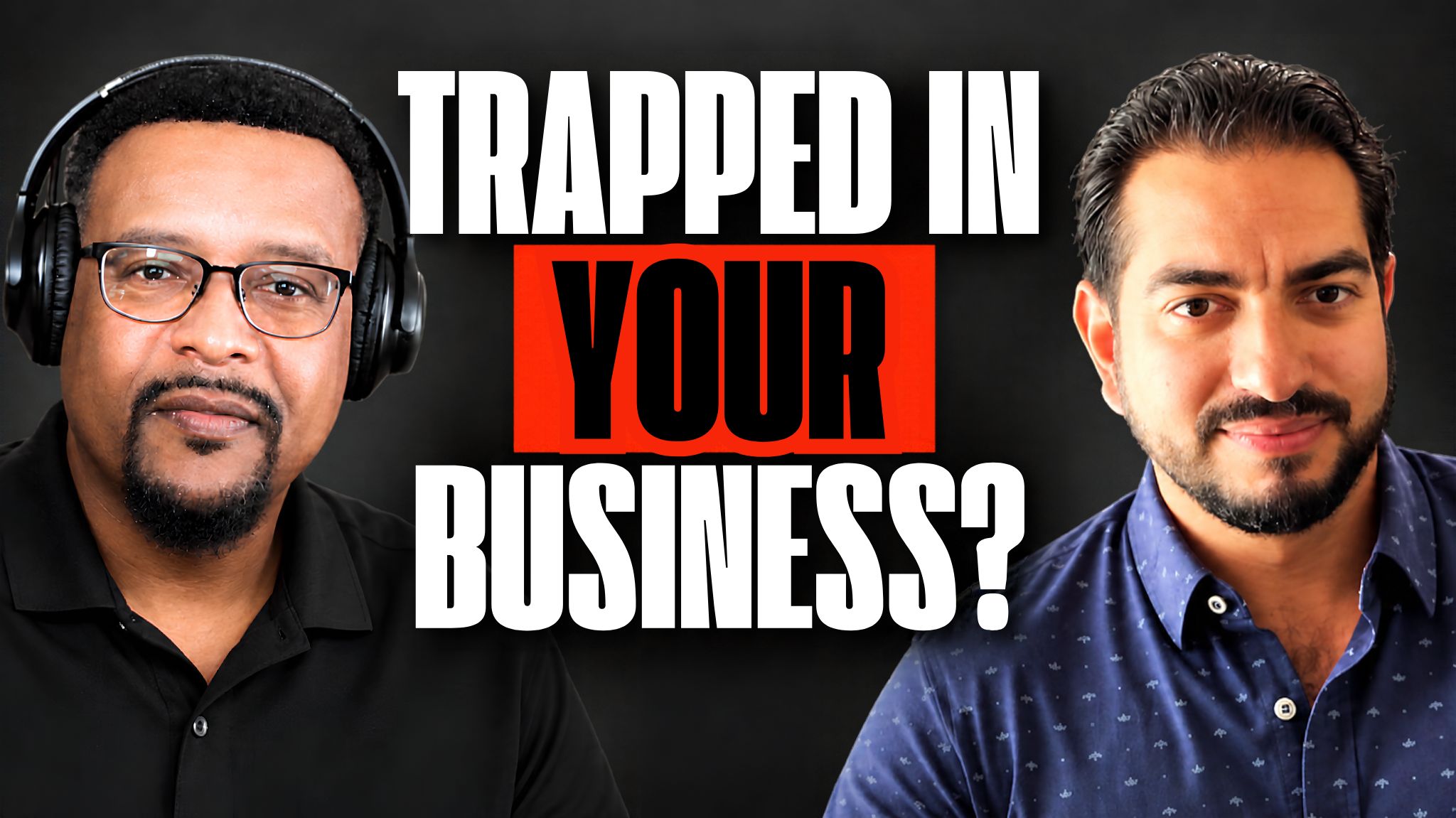
On the latest episode of the Well2Lead Podcast, host Bobby Davis sat down with Sam Shargo to talk about how to break out of this loop. Sam is a former IT managed services provider (MSP) founder turned executive coach and the author of Deliberated Path. He has spent decades mastering the exact operational architecture required to transform a stressed-out, "trapped owner" into a truly liberated leader.
Sam’s wisdom is a breath of fresh air for any business owner who feels like they are drowning in the daily grind. Here is a look at how he went from fixing computers on a bicycle to helping founders claim the freedom they actually started their businesses for.
From a Brooklyn Bike Route to the Executive Suite
Sam's entrepreneurial roots run deep. At just 13 years old, he launched his very first computer repair business. He didn't have an office or a corporate vehicle; he operated a service route on his bicycle, riding through the streets of Brooklyn and Manhattan to fix PCs for clients.
As he grew up and scaled his tech career, he eventually became the COO of a rapidly expanding IT firm. That journey taught him a critical lesson about business scaling: the massive difference between reactive "break-fix" labor and systemic leverage. In the tech world, break-fix means you only get paid when something breaks. It is an unstable, stressful way to make a living. To scale, Sam's team had to pivot into a managed services model—providing fixed-fee, proactive support that aligned their success directly with their clients’ peace of mind.
But as the company grew, Sam noticed an even bigger problem developing among founders. The very skills that make someone a great technical founder (the ability to dig in, fix things, and outwork everyone else) are the exact traits that ruin them as an executive. To survive, a leader has to let go of their old technical identity and embrace a completely new one focused entirely on strategy, culture, and building top-tier talent.
The Identity Trap: Your Business is Not You
One of the deepest psychological breakthroughs Sam shares in this episode revolves around the concept of the founder's ego.
When you build a business from scratch, it is incredibly easy to tie your entire personal self-worth directly to the company’s performance. If revenue is up, you feel like a hero. If a major client leaves or sales take a hit, you sink into a dark hole of personal failure.
"The business is not the person," Sam emphasizes.
When you treat your business as an extension of your personal identity, you lose the ability to make objective, long-term choices. You make decisions based on fear, anxiety, and a desire to protect your ego rather than doing what is best for the enterprise. True leadership liberation requires a healthy, intentional emotional separation. You have to realize that you are the architect of the machine, not a cog inside it.
To help founders achieve this separation and construct an operational machine that runs smoothly in the background, Sam developed the Profit Strategic Alignment Method. This framework requires owners to systematically evaluate and align six critical operational domains:
- People: Putting the right talent in the right seats.
- Revenue: Designing predictable, scalable income streams.
- Operations: Building bulletproof systems and procedures.
- Finance: Managing cash flow and resource allocations objectively.
- Innovation: Constantly evolving your marketplace value.
- Technology: Deploying the right digital assets to maximize human efficiency.
Shifting From "How" to "Who"
So, how do you actually start pulling yourself out of the day-to-day firefighting? It starts by changing the very questions you ask when a problem lands on your desk.
Sam highlights the famous concept of Who Not How. When an issue pops up—whether it’s a glitch in marketing, a billing error, or an onboarding bottleneck—the natural instinct of a scrappy entrepreneur is to ask, "How do I fix this?" They open up a laptop, watch a tutorial, and try to grind out a solution themselves.
A liberated leader immediately asks, "Who can I empower to fix this for me?"
By shifting your mindset from solving everything yourself to finding, trusting, and guiding the right experts, you buy back your mental bandwidth. This gives you the space to step into your true value: focusing on high-level direction, forging major partnerships, and nurturing your team. This growth is accelerated when you actively leverage Sam's Three C's: Coaching, Content, and Community.
The Ultimate Stress Test: When Freedom Matters Most
It is easy to talk about business freedom as an abstract concept or a luxury. We picture taking long vacations or working from a beach. But toward the end of the interview, Sam shares a deeply personal story that illustrates why structural freedom is actually a non-negotiable necessity.
Years ago, Sam’s family faced a sudden, severe medical crisis. It was the kind of emergency that required his complete, undivided attention for weeks on end.
Because Sam had spent years implementing his strategic alignment frameworks, his company didn't skip a beat. The managers executed their roles, the technology ran seamlessly, and the operations continued without him. He was able to close his laptop, shut off his phone, and sit by his family’s side without the terrifying added anxiety that his livelihood was collapsing in the background.
"If the business isn't giving you that freedom," Sam asks, "what's the point of having a business?"
If you want to transition from a trapped, exhausted business operator into an impactful, liberated leader, Sam's final piece of advice is wonderfully simple but incredibly countercultural: "You gotta slow down, and you gotta slow down fast."
Ready to step onto the deliberated path?
Sam Shargo provides elite organizational toolsets and peer support through the ScaleRight Partners Academy and Collective, helping owners build scalable operations that don't depend on them.
🎧 To learn how to reclaim your time and build a business that serves your life rather than consuming it, listen to the latest episode of the Well2Lead Podcast with host Bobby Davis on Spotify, Apple Podcasts, or YouTube!